stepper motor “16 microstep / step” Deep Analysis: From Principles to Applications
1、 Basic concept: Microstep(Microstep)Definition of
“16 microstep / step” It is a core parameter in the field of stepper motor drive, and its essence is achieved throughdriving technology of subdivided procedureMove the motor “Basic step angle” Further splitting.
- core logic:
Assuming a stepper motor “synchronizing”(Basic steps) Step angle is 1.8°, then:
- Whole step runtime(one microstep / Step: Every time received
one A pulse, the motor rotates 1.8°;
- sixteen Microstep runtime: will 1.8° The basic step angle is divided into equal parts sixteen Share, every time received one A pulse, the motor rotates 1.8°÷16=0.1125°.
2、 Technical Implementation: Working Principle of Microstep Driver
- At the hardware level
- Through the internal driveDigital to Analog Converter(DAC) Accurate control of two-phase windings(A XiangB Simulate different directions of magnetic field synthesis based on the current ratio of the phase.
- Example:sixteen When taking small steps,A peace with God B Phase current according to sixteen Combining different proportions (such as A=100%TheB=0%;A=93.3%TheB=38.3%
Etc.), forming sixteen A middle magnetic field position, replacing the traditional whole step
four A fixed position (taking a two-phase stepper motor as an example).
With the whole step / Half step comparison
| drive mode | Step angle (in) 1.8° Taking motors as an example) | Current control accuracy | torque ripple |
|--------------|-----------------------------|------------------|--------------|
| synchronizing | 1.8° | Two phase currents only pass through / sever | Maximum (significant cogging effect) |
| half of step | 0.9°(1.8°÷2) | Current ratio two file | moderate |
| 16 microstep | 0.1125°(1.8°÷16) | Current ratio sixteen file | significantly reduce |
IIIsixteen The core advantages and application scenarios of Microstep
- Three core advantages
- Precision improvement:
Example: A workbench passes through sixteen micro-step driving 1.8° Motor, matching 16:1 Gearbox and lead 5mm The screw, theoretical positioning accuracy from the whole step 5mm×(1.8°/360°)÷16=0.0156mm upgrade to 5mm×(0.1125°/360°)÷16=0.00097mm(About) 1 μ M).
- Smooth operation:
Eliminate the runtime of the entire step “Kardon feeling”, suitable for scenarios that require uniform motion (such as 3D Print nozzle movement).
- Noise and vibration suppression:
After subdivision, the torque fluctuation decreases and the vibration amplitude can be reduced 50% Above (such as sixteen Noise during micro steps 70dB drop to 55dB).
Typical application scenarios
- Precision manufacturing industry:
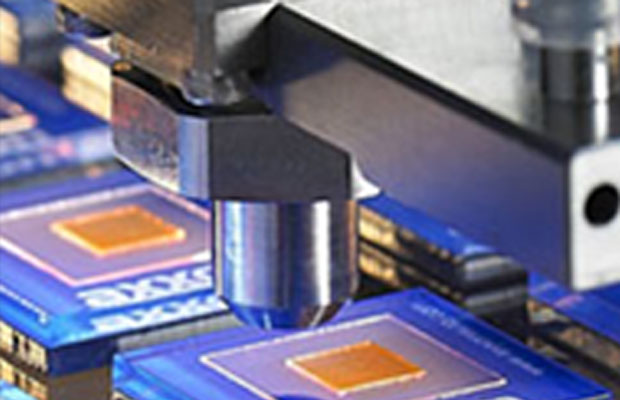
Chip picking platform for semiconductor packaging equipment, through sixteen Microstep implementation
± 10 μ M The positioning accuracy.
- medical equipment:
The sample moving platform of the nuclear magnetic resonance instrument requires low vibration (to avoid interfering with the magnetic field),sixteen The combination of micro step drive and shock-absorbing structure can meet the requirements.
- high-end 3C product:
The autofocus motor of the mobile phone camera module,sixteen The micro step drive ensures no jerking during the focusing process, enhancing the photography experience.
4sixteen Limitations of Microstep and Precautions for Use
- Three potential issues
- Torque attenuation:
When driving with micro steps, the output torque of the motor decreases as the subdivision ratio increases. Example:sixteen The torque during micro steps is approximately equal to that of the entire step 70%(Due to the weakening of the synthesized magnetic field strength after current subdivision).
- Drive complexity:
Need the driver to support high resolution DAC(such as ten Higher cost compared to full step drive (above) 30%-50%.
- Pulse frequency requirement:
When achieving the same rotational speed,sixteen The pulse frequency required for micro steps is full step
sixteen Twice. Example: Motor speed in the entire step 100rpm need
two thousand pulse / In seconds,sixteen Micro steps require thirty-two thousand pulse / Seconds require higher performance from the controller.
Debugging key parameters
- CURRENT SETTING:
sixteen When taking micro steps, it is recommended to set the driving current to the rated current of the motor 1.1-1.2 Multiple (compensating for torque attenuation).
- Acceleration and deceleration curve:
When starting, use S Type acceleration and deceleration (rather than non-linear acceleration), to avoid step loss caused by sudden changes in pulse frequency (especially near the motor resonance frequency range).
- Resonance point avoidance:
Monitor the motor current waveform through an oscilloscope and find sixteen Resonance frequency under microsteps (usually at 500-1000Hz)Skip this frequency band in the control program.
5、 Compared to higher subdivisions (such as thirty-two Comparison and selection of micro steps
|
dimension
|
sixteen microstep
|
thirty-two Micro steps and above
|
|
Precision advantage
|
Satisfy most precision scenarios(± 10 μ M)
|
Can achieve nanometer level precision (such as semiconductor lithography machines)
|
|
Torque attenuation
|
about 30%(More complete steps)
|
Attenuation to 50% above
|
|
Applicable scenarios
|
3D Printing, ordinary CNC machine tools, medical equipment
|
Semiconductor equipment, aerospace precision platforms
|
|
cost comparison
|
Driver cost is moderate
|
High cost of drive (required) twelve Above the position
DAC)
|
Summary:sixteen The essence and value of micro steps
“16 microstep / step” It's a stepper motor “rough control” Moving towards “precision drive” The core value of the key technology lies in:
- Replace mechanical subdivision with electronic subdivisionBy precise control of current, the step angle can be finely divided to avoid gaps and wear caused by mechanical gearboxes;
- Balance accuracy and torqueIn most industrial scenarios,sixteen Micro steps can satisfy both ±0.01mm Grade accuracy while retaining 70% The above rated torque is the most cost-effective choice.
In practical applications, it is recommended to consider the load accuracy requirements, torque requirements, and cost budget sixteen Flexible selection between micro steps and higher subdivisions, and optimal performance through driving parameter optimization (such as current, acceleration and deceleration).


 Company Profile